How to Light Artwork Properly in Any Room
A vibrant painting can change the entire feeling of a room, but poor lighting can make even the most expressive artwork appear flat, shadowed, or strangely dull. Learning how to light artwork properly helps the colors, layers, movement, and craftsmanship of a piece come forward as the artist intended. It also protects the work from unnecessary exposure to heat and damaging light.
Artwork deserves more than whatever light happens to reach the wall. A thoughtful lighting plan gives a bold abstract painting its energy, brings the fine details of a giclée into focus, and makes a carefully chosen piece feel like the visual center of the room.
How to Light Artwork Properly: Start With the Light Itself
For most homes, LED lighting is the best choice for artwork. Quality LEDs produce very little heat, use less energy than older bulbs, and are available in color temperatures that flatter both art and interiors. They are especially practical for collectors who want to display paintings beautifully without making the room feel like a formal gallery.
Look first at color temperature, measured in Kelvins. A warm white light between 2700K and 3000K is often ideal in living rooms, bedrooms, and dining spaces. It feels inviting while preserving the warmth in reds, golds, oranges, and rich neutrals. For a more contemporary office, hallway, or bright white interior, 3000K to 3500K can create a cleaner presentation without becoming harsh.
Color rendering matters just as much. Choose bulbs or fixtures with a Color Rendering Index, or CRI, of 90 or higher. A high-CRI light reveals subtle variations in color more faithfully. This is particularly valuable for artwork with layered acrylics, alcohol inks, faux stained-glass effects, or saturated blues and purples, where low-quality lighting can make a beautiful palette look muddy.
Avoid bulbs that cast a noticeably green, gray, or overly yellow tint. If the room lighting changes the personality of the art, the fixture is not doing its job.
Use the 30-Degree Rule for a Flattering Angle
The direction of light affects what viewers see. A useful starting point is the 30-degree rule: aim the light toward the artwork at approximately a 30-degree angle from the wall. This angle provides even illumination while reducing glare and keeping your own shadow from falling across the piece as you stand nearby.
When light is placed too close to the wall, it can create a distracting bright strip at the top of the artwork and leave the lower portion in shadow. When it is placed too far out, it may shine directly into the viewer's eyes or create reflections on glass and glossy surfaces.
For ceiling-mounted track lighting or recessed adjustable fixtures, the placement will depend on ceiling height and the size of the work. In many rooms with an 8-foot ceiling, positioning the fixture roughly 2 to 3 feet away from the wall gives a workable starting point. Larger paintings or taller ceilings may need the fixture set farther out. The goal is not to follow a rigid formula, but to create a soft, even wash of light across the full composition.
Stand where guests will naturally view the artwork and check the effect. If you see a bright glare rather than the image, adjust the angle slightly. Small changes make a remarkable difference.
Match the Fixture to the Artwork and the Room
The best fixture depends on whether the art is a single focal point, part of a salon-style wall, or one element in a larger interior design plan.
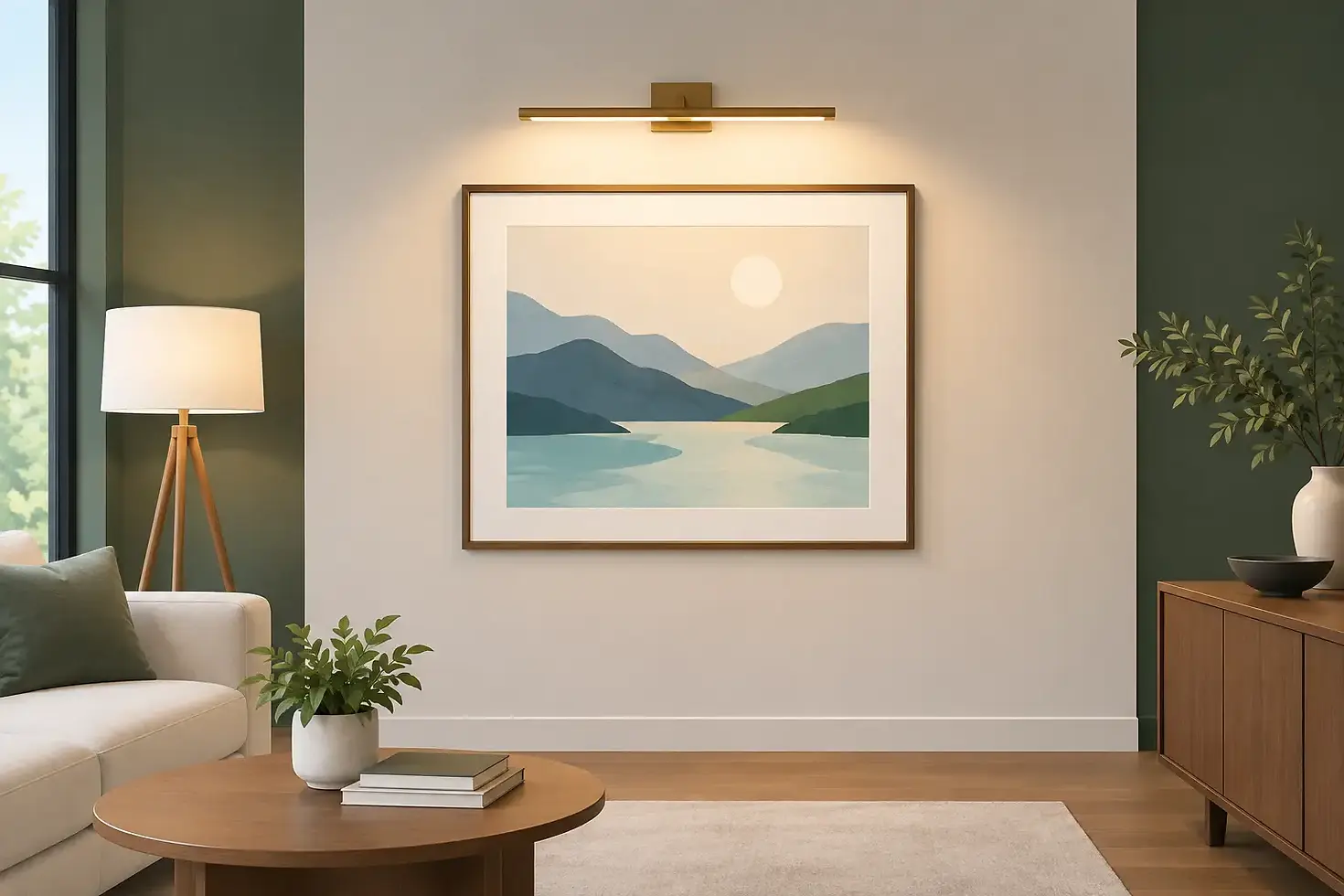
Picture lights are an elegant choice for a framed work above a console, fireplace mantel, desk, or bed. They attach to the frame or wall and create a classic, intimate presentation. Select a picture light that is about one-half to two-thirds the width of the frame. A fixture that is too narrow can leave the edges dark, while one that extends beyond the artwork can draw attention away from the piece.
Track lighting offers more flexibility for a gallery wall, a long hallway, or a room where the arrangement may change over time. Individual heads can be aimed at separate artworks, allowing you to highlight a vivid marine scene beside a floral canvas or give a panoramic piece the wider spread it needs.
Recessed adjustable lights are more discreet. They work beautifully in modern spaces where you want the art to feel illuminated without making the fixtures a design feature. Wall washers can also be effective for larger collections, though they need careful positioning to avoid uneven pools of light.
In a smaller condo or apartment, a well-placed floor lamp may be enough to support a special piece, especially when paired with ambient ceiling light. It will not provide the precision of dedicated art lighting, but it can create a warm evening setting without a renovation.
Choose Brightness Without Overpowering the Art
More light is not always better. Artwork should feel present and alive, not blasted by a spotlight. A modest framed print may look beautiful with a fixture producing 200 to 400 lumens, while a larger original canvas can often handle 500 to 800 lumens or more. Ceiling height, wall color, surrounding daylight, and the darkness of the painting all affect the final choice.
Dimmers are one of the most useful additions to art lighting. During the day, natural light may already fill the room. In the evening, the artwork can take on a more dramatic role. A dimmer lets you adjust brightness for both moments and prevents the light from feeling overly theatrical.
Pay attention to the contrast between the art and its surroundings. A dark, dramatic painting on a deep wall may need a little more focused light to retain its visual depth. A bright abstract canvas against a pale wall may need less. The right level lets the artwork lead the eye without making the rest of the room disappear.
Protect Artwork From Sun, Heat, and Glare
Natural daylight is beautiful, but direct sunlight is not kind to art. Ultraviolet light can fade pigments, papers, textiles, and photographs over time. Even indirect sunlight can be strong near large windows, especially in rooms that receive intense afternoon exposure.
Keep original paintings and fine art prints out of direct sun whenever possible. Sheer curtains, UV-filtering window treatments, and thoughtful wall placement can reduce risk while keeping the room bright. If a favorite wall receives strong sun every day, consider placing a less light-sensitive decorative piece there and reserving original work for a more protected location.
Heat is another concern. Do not hang artwork directly above radiators, fireplaces that are regularly used, or heating vents. Heat fluctuations and dry air can affect canvases, paper, adhesives, and framing over time. LED fixtures are helpful because they run much cooler than halogen bulbs, but the fixture should still remain at a reasonable distance from the artwork.
Glare deserves its own check, especially with art behind glass. A painting with glossy varnish, a framed giclée, or a work displayed in a bright room may reflect windows, lamps, and overhead fixtures. Use adjustable lights, anti-reflective glazing when framing, and a slight change in viewing angle to reduce the issue. Often, moving a fixture just a few inches is enough.
Light Different Surfaces With Care
Textured art responds to light differently than a smooth print. A thickly painted canvas, mixed-media work, or faux stained-glass-inspired piece can gain dimension from slightly angled light that reveals texture and movement. Yet lighting from too steep a side angle may create hard shadows that distract from the composition.
For glossy artwork or pieces protected by glass, use a broader, softer beam and avoid positioning the light directly in front of the viewer. Matte-finish prints are generally more forgiving, while metallic details, resin, and high-gloss varnishes require more testing.
Large horizontal artwork often benefits from two carefully aimed fixtures rather than one powerful center light. This prevents bright hotspots and helps the entire piece read as one balanced image. Conversely, a small jewel-like painting may need only a single focused beam to feel special.
At Mila's Creations, color-rich originals and museum-quality giclées are designed to bring personality into everyday spaces. The right lighting lets those colors remain expressive from morning through evening, whether the artwork lives in a calm bedroom, a polished office, or a lively dining room.
Create a Layered Room, Not a Spotlight Stage
Dedicated art lighting works best when it belongs to a layered lighting plan. Ambient light provides general visibility, task lighting supports reading or working, and accent lighting gives art, architecture, and meaningful objects their moment. If every fixture points at the walls, the room can feel unbalanced. If no light reaches the art, it may disappear after sunset.
Begin with the room as it is used. A living room needs comfort and conversation. A home office needs clarity without glare on screens. A dining room can welcome more drama in the evening. Let the lighting support that experience, then give the artwork enough attention to hold its place in the composition.
Before committing to permanent fixtures, test the effect at night with lamps, adjustable bulbs, or temporary track heads. Notice how the colors shift, where reflections appear, and how the piece feels from the doorway, sofa, or dining table. The most successful lighting does not call attention to itself. It simply makes the artwork feel exactly where it belongs: alive, intentional, and impossible to overlook.


Comments